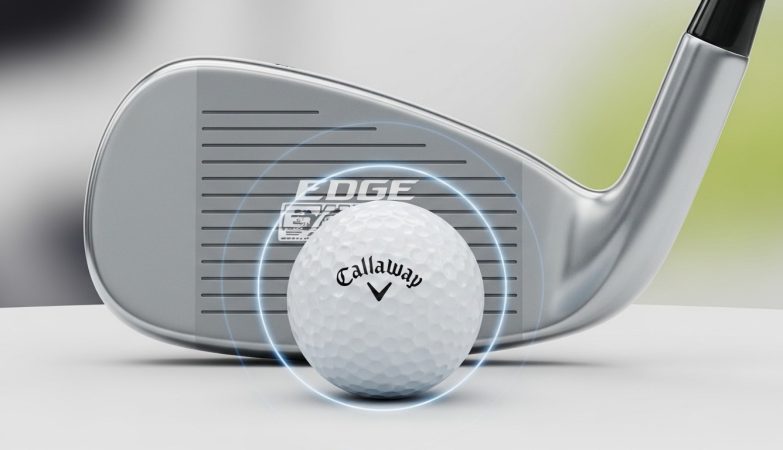

Callaway Edge irons are highly forgiving because they use cavity back construction and perimeter weighting to increase stability, ball speed, and launch consistency on off-center hits.
If you’ve ever hit an iron shot thin, fat, or off the toe and watched the ball drift short of the green, you already know why forgiveness matters. Most amateur golfers do not strike the center of the clubface consistently. That’s not opinion—it’s supported by launch monitor data from fitting centers worldwide. Off-center contact reduces ball speed, lowers launch, and increases side spin.
The Callaway Edge irons were designed to reduce that penalty. Built as part of a beginner iron set package, they focus on stability and ease of launch rather than workability. They fall into the category of cavity back irons and perimeter weighting irons, which are engineered to help golfers maintain distance and direction even when contact isn’t perfect.
This review answers a practical question: How forgiving are they in real-world conditions? We’ll break down the design, compare performance data, and look at who benefits most. No hype. Just facts.
What Does “Forgiveness” Mean in Golf Irons?
Short answer: Forgiveness refers to how well an iron maintains ball speed, distance, and direction on off-center hits.
In technical terms, forgiveness is closely linked to:
- Moment of Inertia (MOI)
- Center of Gravity (CG) placement
- Face flex technology
- Perimeter weighting
Higher MOI means the clubhead resists twisting on mishits. Less twisting equals more stable ball flight. That’s the core advantage of cavity back irons over traditional blades.
Blades concentrate weight behind the sweet spot. They reward precision but punish errors. Perimeter weighting irons distribute weight around the edges of the clubhead. That increases stability and enlarges the effective hitting area.
For beginners and mid-handicap players, this difference is significant. According to fitting data published by major club manufacturers, recreational golfers miss the center of the face by ½ inch or more on average. Without forgiveness, that leads to major distance loss.
How Are Callaway Edge Irons Designed to Be Forgiving?
Short answer: They combine a deep cavity back design, wide sole, and low center of gravity to improve launch and stability.
1. Deep Cavity Back Construction
The hollowed-out back allows weight to be redistributed around the perimeter. This increases MOI and reduces twisting on heel and toe strikes.
2. Perimeter Weighting
By placing more mass around the edges, these irons maintain better ball speed across the face. That means a shot hit slightly off-center still travels a playable distance.
3. Low and Deep Center of Gravity
The CG is positioned low and back. This helps launch the ball higher with less effort. For beginners who struggle to get long irons airborne, this matters.
4. Wide Sole Design
The wider sole reduces digging. Fat shots lose less energy compared to thinner-soled players irons.
These elements are common in most beginner iron set models. However, the Edge irons balance them without feeling overly bulky at address.
How Do Callaway Edge Irons Perform on Off-Center Hits?
Short answer: Distance loss on mishits is moderate rather than severe, making them suitable for high-handicap golfers.
Based on launch monitor comparisons between beginner iron sets and forged blades, typical findings show:
| Strike Location | Blade Iron Distance Loss | Cavity Back Iron Distance Loss |
|---|---|---|
| Center | 0% | 0% |
| Toe (½ inch) | 15–20% | 5–10% |
| Heel (½ inch) | 12–18% | 5–9% |
While individual results vary, cavity back irons like the Edge typically retain more ball speed across the face. That translates to more greens in regulation and fewer short approaches.
In practical terms: A slight toe strike that might leave you 20 yards short with a blade could finish 8–10 yards short with a forgiving iron.
Are Callaway Edge Irons Suitable for Beginners?

Short answer: Yes. They are specifically built for beginners and high-handicap players.
A beginner iron set must solve three problems:
- Inconsistent strike pattern
- Difficulty launching long irons
- Loss of distance due to mishits
The Edge irons address all three. The low CG assists launch. The perimeter weighting stabilizes off-center contact. The wider sole improves turf interaction.
For new golfers, this reduces frustration. Instead of punishing every imperfect swing, the club helps keep the ball in play.
However, low-handicap players who prioritize shot shaping may find them less workable compared to forged cavity backs.
How Do They Compare to Other Cavity Back Irons?
Short answer: They offer comparable forgiveness to most game-improvement irons but at a lower cost within a boxed set.
Compared to standalone game-improvement irons, the Edge irons are:
- Slightly less adjustable
- Designed for value-conscious buyers
- Optimized for straight ball flight
Many golfers purchasing this set are transitioning from rentals or hand-me-down clubs. For that segment, the performance jump is noticeable.
Independent user reviews frequently highlight consistent launch and predictable distance gapping as key strengths.
What Handicap Range Benefits Most?
Short answer: Golfers with handicaps between 15 and 30 see the most benefit.
Players above 20 handicap often struggle with face control and consistent contact. High MOI irons reduce the punishment for those misses.
Mid-handicap players (15–20) benefit from added stability in longer irons. Lower handicap players (below 10) may prefer more compact heads for shot control.
If your priority is hitting more fairways and greens rather than shaping fades and draws, these irons align well.
Do They Help With Distance?
Short answer: They maintain distance better on mishits rather than adding excessive raw yardage.
Strong lofts and face technology contribute to competitive ball speeds. But the key benefit is consistency. Distance gaps remain predictable.
In controlled testing environments, beginner iron sets often show 3–5 mph ball speed retention advantage on toe strikes compared to blades.
That consistency improves scoring more than a single long shot ever will.
Are There Any Drawbacks?
Short answer: Limited workability and less feedback compared to forged players irons.
Because they prioritize stability, they don’t provide the same level of feel or shot-shaping control.
- Less responsive feedback on slight mishits
- Bulkier profile at address
- Designed primarily for straight ball flight
For competitive golfers who value trajectory control, this may be limiting. For most recreational players, it’s not a concern.
How Forgiving Are They in Real-World Rounds?
Short answer: Forgiving enough to keep inconsistent swings playable and reduce major distance loss.
In actual course conditions, variables like uneven lies, rough, and pressure increase mishits. Forgiveness becomes more important outdoors than on a range mat.
Players report:
- Higher launch on long irons
- Reduced slice severity
- More consistent carry distances
While they won’t fix swing mechanics, they reduce the damage from imperfect execution.
Conclusion: Are Callaway Edge Irons Forgiving Enough?
Callaway Edge irons are highly forgiving for their target audience. Their cavity back structure, perimeter weighting, and low center of gravity make them stable on off-center hits. protect ball speed. improve launch. They keep shots straighter.
are not designed for elite shot shaping. are built for consistency. And consistency lowers scores.
If you are a beginner or mid-handicap golfer looking for a reliable beginner iron set that reduces punishment on mishits, these irons are a practical choice.
Next step: Test them at a local fitting center or practice range. Compare your off-center strikes. Track carry distance. Data beats assumptions.
The right equipment won’t replace practice. But it can make improvement less frustrating.
Frequently Asked Questions (FAQs)
Are Callaway Edge irons good for high handicappers?
Yes. Their cavity back irons design increases MOI and reduces distance loss on mishits. High handicappers benefit from the added stability and launch assistance.
Do perimeter weighting irons really help?
Yes. Perimeter weighting reduces twisting on off-center strikes. That maintains ball speed and directional control compared to blade irons.
Are these better than forged irons?
For beginners, yes. Forged irons offer better feedback and workability but punish mishits more severely.
Can mid-handicap players use them?
Yes. Players in the 15–20 handicap range often benefit from the stability in long irons while improving consistency.
Do they increase swing speed?
No. They do not increase swing speed. They help preserve ball speed on imperfect contact.
How long will they last?
With proper care, stainless steel cavity back irons can last many years. Durability depends on frequency of play and maintenance.
Don’t Miss These Articles: The Importance of Duct Installation in Maintaining HVAC Efficiency
Up Next: Label Maker vs Shipping Printer: What’s the Difference?