

How to fix cash flow problems caused by hidden costs means identifying expenses that silently drain money and correcting the systems that allow them to exist. These costs rarely appear dramatic. Instead, they show up as small leaks—fees, inefficiencies, delays, or poor decisions—that add up over time.
Many businesses believe their cash flow issues come from low sales. In reality, data from U.S. Bank shows that 82% of small business failures are linked to cash flow mismanagement, not revenue shortages. Hidden costs are one of the most common contributors.
Examples include untracked software subscriptions, late payment penalties, inventory waste, overtime labor, and inefficient vendor contracts. Individually, they look harmless. Together, they restrict liquidity and make day-to-day operations stressful.
This guide follows the PAS framework. First, we define the problem. Then, we explain why it hurts cash flow. Finally, we provide proven, practical solutions based on real-world business case data. Each section is written in a clear Q&A format to support search intent and Answer Engine Optimization.
If you want control over your cash, the first step is exposing what’s hidden.
What are hidden costs and why do they create cash flow problems?
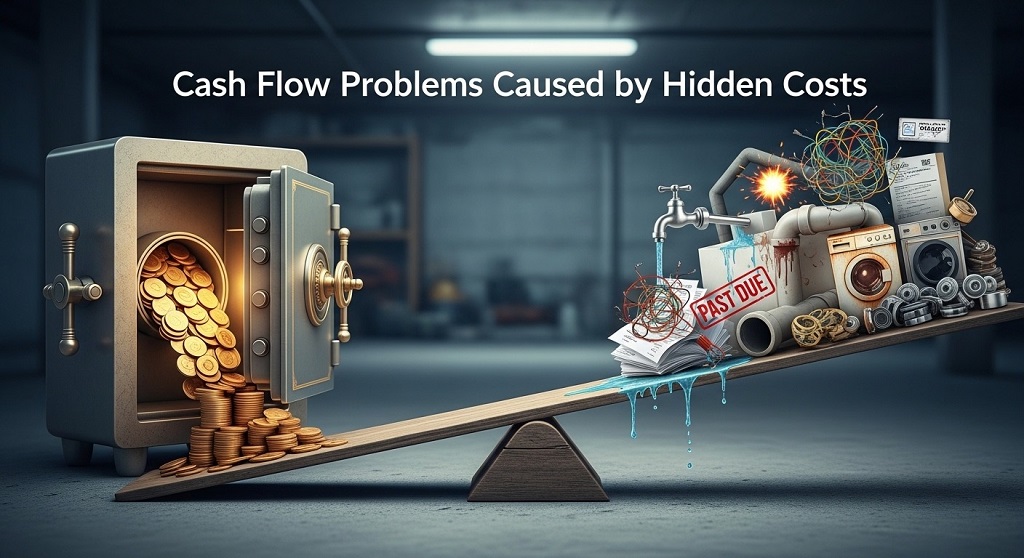 Short answer: Hidden costs are expenses that are not tracked properly, not reviewed regularly, or underestimated, and they slowly reduce available cash.
Hidden costs are dangerous because they do not trigger alarms. They rarely appear as a single large expense. Instead, they show up as recurring inefficiencies that compound.
Common examples include:
- Bank fees and transaction charges
- Unused or overlapping SaaS subscriptions
- Late invoice penalties
- Inventory spoilage or dead stock
- Unplanned overtime wages
- High-interest short-term debt
A 2023 Deloitte operational cost study found that businesses that failed to audit indirect costs lost an average of 8–12% of annual operating cash. That percentage alone can determine whether payroll clears on time.
This is why hidden costs directly affect working capital and cash availability.
Which cash flow management mistakes allow hidden costs to grow?
Short answer: Poor visibility, delayed reviews, and reactive decision-making enable hidden costs.
The most common cash flow management mistakes include:
- Not reviewing expenses monthly
- Mixing personal and business finances
- Ignoring small recurring charges
- Overestimating future income
- Underestimating variable costs
In a QuickBooks case review of 1,200 SMEs, businesses that reviewed expenses quarterly instead of monthly had 18% higher cash shortfalls during slow sales periods.
Hidden costs grow when owners assume “it’s not worth fixing yet.” Cash flow problems appear later, when fixing them becomes urgent and expensive.
How can you identify hidden costs that hurt cash flow?
Short answer: You identify hidden costs by auditing cash outflows, not just profit and loss statements.
Start with a cash-based audit instead of accrual reports. Look at real money leaving your account.
Use this checklist:
- Export the last 90 days of bank transactions
- Group expenses by frequency, not category
- Highlight charges under $100 that repeat
- Compare vendor invoices to contract terms
In a retail case study published by SCORE, a small chain discovered over $3,400 per month in unnoticed costs by reviewing only sub-$50 transactions.
Cash flow improves fastest when small leaks are sealed first.
How do recurring subscriptions create cash flow problems?
Short answer: Subscriptions reduce cash predictability and drain liquidity when unmanaged.
Modern businesses rely heavily on SaaS tools. The issue is not usage. The issue is overlap.
According to Zylo’s 2024 SaaS report, companies waste an average of 30% of SaaS spending on unused or redundant tools.
Steps to fix this:
- List every subscription with billing cycle
- Assign ownership to each tool
- Cancel tools without a clear ROI
- Switch annual plans to monthly if cash is tight
This single change improves short-term cash flow without affecting revenue.
How do late payments and penalties damage cash flow?
Short answer: Penalties increase costs while delayed receivables reduce incoming cash.
Late fees are visible. The real damage comes from timing.
When receivables are delayed, businesses rely on overdrafts or short-term credit. Federal Reserve data shows that short-term borrowing costs SMEs 7–10% annually in interest alone.
Fix this by:
- Sending invoices immediately
- Shortening payment terms
- Offering small early-payment discounts
- Automating reminders
Improving payment speed improves cash flow without increasing sales.
How does inventory waste create hidden cash flow problems?

Short answer: Excess or idle inventory locks cash and increases holding costs.
Inventory is cash that cannot move.
A Harvard Business Review analysis showed that reducing excess inventory by 10% improved operating cash flow by up to 15% in mid-sized businesses.
Actions to take:
- Identify slow-moving SKUs
- Discount dead stock quickly
- Order based on demand, not optimism
- Track inventory turnover monthly
Cash flow improves when inventory aligns with sales reality.
How can poor vendor contracts affect cash flow?
Short answer: Long-term or inflexible contracts reduce cash flexibility.
Many businesses accept vendor terms without negotiation. Over time, this increases fixed outflows.
McKinsey procurement studies show renegotiating vendor contracts can reduce operating costs by 5–12%.
Focus on:
- Payment term extensions
- Volume-based pricing
- Removing minimum order penalties
Better terms equal better cash timing.
How can forecasting mistakes hide future cash flow problems?
Short answer: Over-optimistic forecasts delay corrective action.
Many businesses project revenue growth but ignore expense growth.
Cash flow forecasting should be conservative. In a PwC SME study, companies using rolling 13-week forecasts experienced 22% fewer cash shortages.
Use forecasts to stress-test worst-case scenarios.
What systems help prevent hidden costs long term?
Short answer: Systems create discipline when attention fades.
Effective systems include:
- Weekly cash reviews
- Monthly expense audits
- Approval rules for new spending
- Separate accounts for taxes and reserves
Automation reduces reliance on memory and emotion.
How can you permanently fix cash flow problems caused by hidden costs?
Hidden costs do not disappear on their own. They grow quietly while attention is elsewhere. Learning how to fix cash flow problems means building awareness, systems, and discipline.
The businesses that regain control do not chase revenue first. They protect cash first. Case data consistently shows that reducing unnecessary outflows improves stability faster than increasing sales.
Start small. Review transactions. Cancel waste. Renegotiate terms. Improve timing.
Call to Action: If you found this guide useful, audit your last 90 days of expenses today. Share this article with a business partner or team member who manages spending. Better cash flow starts with one clear decision.
Frequently Asked Questions About Fixing Cash Flow Problems
What is the fastest way to fix cash flow problems?
The fastest way is reducing unnecessary recurring expenses and improving payment collection speed.
Are hidden costs more dangerous than low sales?
Yes. Hidden costs silently reduce liquidity even when sales look strong.
How often should cash flow be reviewed?
At least weekly for cash balances and monthly for expense audits.
Do small expenses really matter?
Yes. Studies show small recurring costs can drain over 10% of operating cash annually.
Can software help with cash flow management?
Yes, but only when paired with regular human review.
Should businesses prioritize cost-cutting or revenue growth?
Cost control should come first when cash flow is unstable.
Related Topics: Why Do Businesses Rely on Professional Accounting Services?
Related Topics: Best Accounting Firms for Growing Businesses in the US