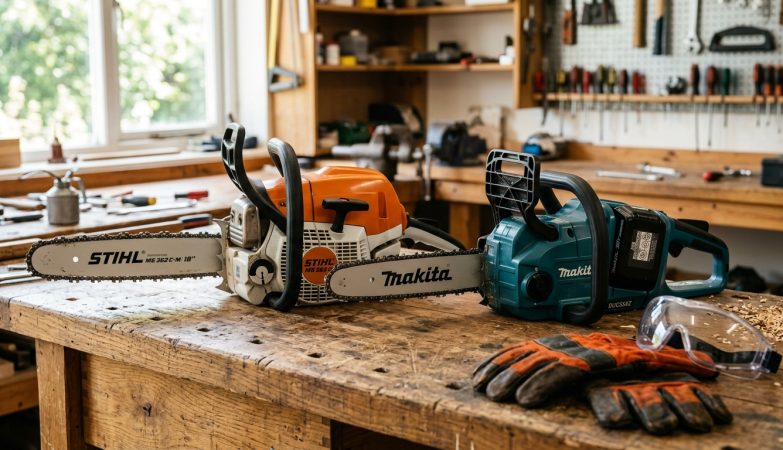
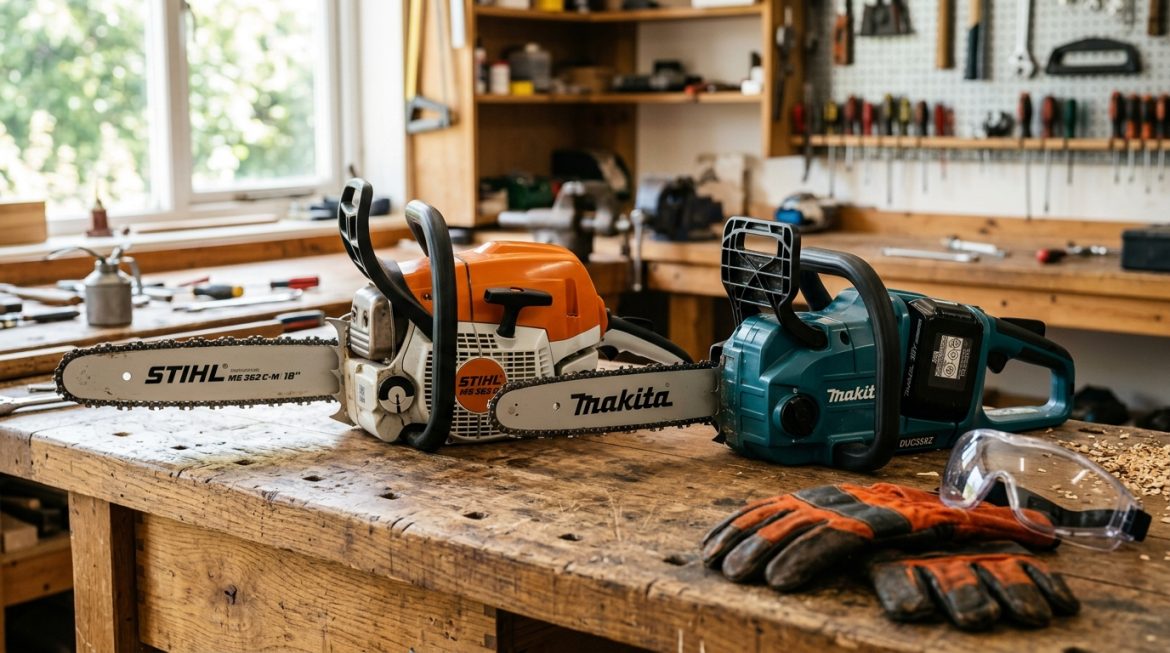
The storm has passed, and you’re staring at a limb that came down across your driveway. You only need a chainsaw a few times a year, so the buying decision feels bigger than it should: do you deal with mixing fuel and pull-starting a gas saw, or do you accept the limits of a battery and go electric? Most homeowners never get a straight answer, just brand loyalists arguing past each other. If you want to see how a dedicated gas saw is specced in practice, a model like the BestUSATools 20-inch 62cc gas chainsaw shows what that class offers. This guide explains the trade-offs so you can match the tool to your actual property and use.
Quick Answer
Choose electric (battery or corded) if you cut occasional limbs, storm debris, or firewood up to roughly 12–14 inches and want instant starting with almost no maintenance. Choose gas if you regularly cut larger hardwood, work far from power or for hours at a time, or need a saw for heavy storm cleanup. Electric wins on convenience and upkeep; gas wins on sustained power, runtime, and range.
Key Takeaways
- Match the saw to your biggest realistic job, not your average one — underpowering your saw is the most common homeowner regret.
- Electric saws start instantly and need no fuel mixing, air filters, or spark plugs; gas saws need regular maintenance to run reliably.
- Battery runtime, not bar length, is usually the limiting factor for cordless electrics.
- Gas saws cost more to run and store, but deliver consistent power and unlimited runtime with refueling.
- For most suburban homeowners cutting occasionally, a battery chainsaw covers the job with far less hassle.
How Gas and Electric Chainsaws Actually Differ
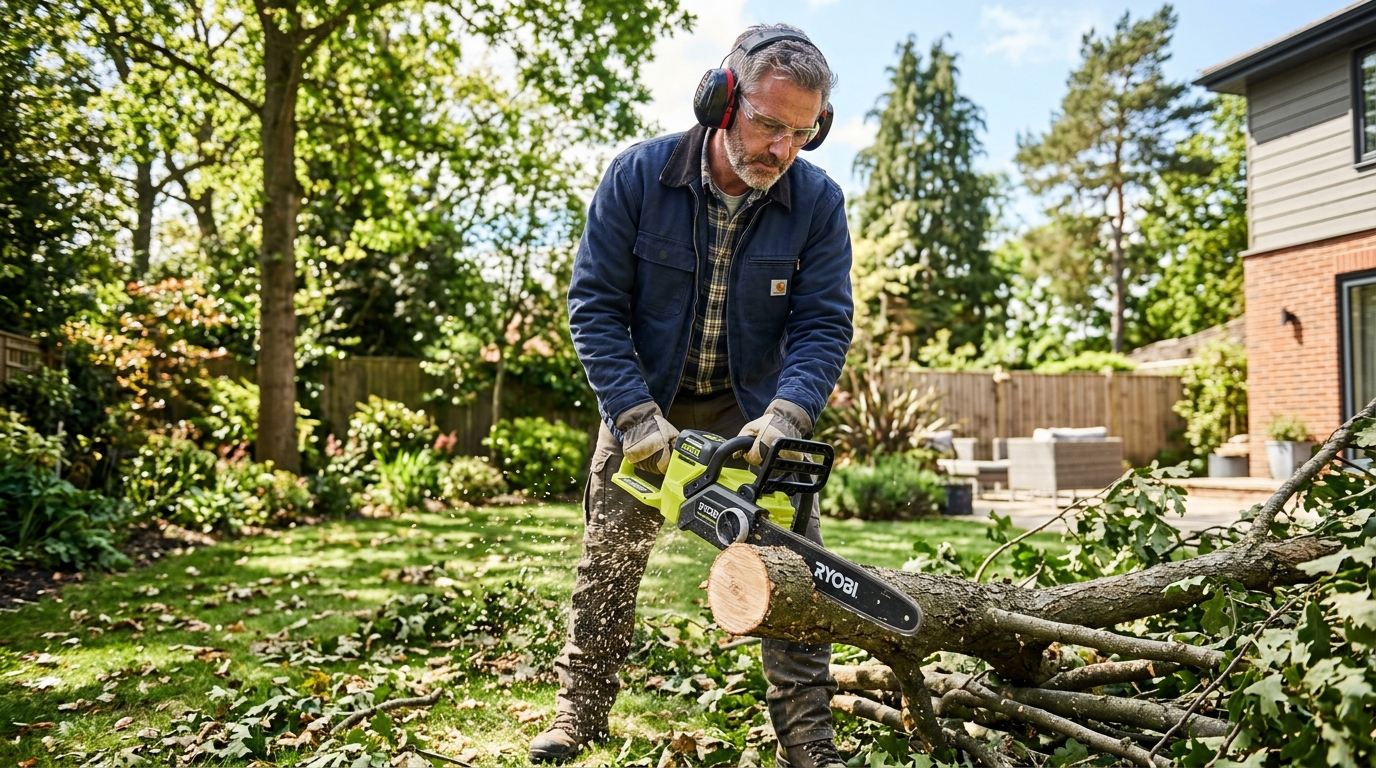
The difference isn’t just the power source. It’s how each saw behaves under load, how often you maintain it, and how much it costs to own. Gas engines typically deliver high torque and can run all day as long as you keep refueling. Electric motors (especially brushless ones) produce strong torque too, but battery models are limited by the energy stored in the pack, and corded models are limited by the cable.
Here’s how the two compare on the factors that matter most to homeowners:
| Factor | Gas Chainsaw | Electric Chainsaw |
|---|---|---|
| Starting | Pull start; can be fussy when cold or flooded | Push a button; works immediately |
| Power | High and consistent, especially in large hardwood | Good for most home tasks; tapers as battery drains |
| Runtime | Refuel and keep going | Limited by battery or cord length |
| Maintenance | Fuel mixing, filters, plugs, carburetor care | Very little; keep the bar oiled and chain sharp |
| Noise | Loud; hearing protection needed | Much quieter |
| Emissions & storage | Exhaust fumes; fuel can go stale | No fumes; safer to store indoors |
| Best for | Heavy, frequent, or remote cutting | Occasional yard and storm cleanup |
Why the Type of Cutting You Do Decides It
What you cut matters more than how often. A saw that breezes through a 6-inch pine limb can bog down in dry oak twice that size.
Small limbs and brush
Anything under roughly 8 inches is easy work for a quality electric saw. This is the majority of what most homeowners face: fallen branches, overgrown shrubs, and small trees. A battery model handles this without fuel, fumes, or pull-start frustration.
Firewood and medium trunks
Once you’re bucking logs around 10–16 inches, power and runtime start to separate the two types. A mid-size gas saw holds its RPMs through a long cut. A cordless saw can do it, but you’ll likely burn through battery capacity faster and may need a spare pack to finish a full session.
Large hardwood and storm cleanup
For 18-inch-plus trunks, buried limbs, or a full day of cleanup after a major storm, gas is the more dependable choice. It won’t stop mid-cut because a battery died, and it keeps producing power as long as you refuel. This is the scenario where a 62cc-class gas saw earns its place, after spending hours working in the yard or garage, sitting comfortably with proper posture is essential learn more about how to find the top-rated back support office chairs in wa.
Runtime, Refueling, and the Reality of Batteries
Battery runtime is the single most misunderstood spec in cordless chainsaws. Manufacturers advertise minutes of cutting, but that figure assumes ideal conditions. In thick hardwood, a saw draws far more current, so real-world runtime can drop well below the advertised number.
Two practical habits solve most of this:
- Buy a saw that uses a battery platform you already own, so you can share packs across tools.
- Keep at least one charged spare battery on hand before starting a bigger job.
Corded electric saws eliminate runtime anxiety but trade it for a cord. That’s fine within about 100 feet of an outlet and a clear path, but useless in a back field or up a tree. Gas avoids both limits, which is precisely why it remains the standard for remote and heavy work.
Maintenance and Ownership Costs
This is where electric quietly wins for casual users. A gas saw needs fresh, correctly mixed fuel, a clean air filter, a functioning spark plug, and occasional carburetor attention. Leave fuel sitting in it over winter and you may be rebuilding the carburetor come spring. Ethanol-blended fuel and stale gas are common culprits behind “it won’t start” complaints.
An electric saw asks far less. Keep the bar oil reservoir filled, keep the chain sharp and tensioned, and it’s ready. The battery is the main consumable; over years it will lose capacity and eventually need replacing. Factor that into the long-term cost.
On running cost, gas is the more expensive option per hour once you account for fuel, oil mix, and the maintenance parts that wear out. Electric’s cost depends mostly on your electricity rate and battery lifespan.
Safety Differences Worth Knowing
Neither type is inherently “safer” — both cut flesh just as easily — but they fail differently.
- Noise: Gas saws are loud enough to require hearing protection and can make communication difficult. Quieter electric saws let you hear warnings and stay more aware of your surroundings.
- Vibration: Gas saws typically vibrate more, which contributes to fatigue on long jobs.
- Instant torque: Electric saws deliver torque immediately at the trigger, so kickback can arrive with less warning. Keep a firm grip and use both hands.
- Fumes: Never run a gas saw indoors or in a closed garage. Electric produces no exhaust, but you should still never operate any chainsaw in an enclosed space.
Whichever you choose, wear chaps, eye and ear protection, and a helmet, and never cut above shoulder height with a saw you can’t fully control.
Which One Should You Buy?
Pick based on your heaviest expected job, not your lightest. Here’s a simple way to decide:
- List the three largest cuts you expect to make in the next two years.
- If the largest is under about 12 inches and you have fewer than a handful of big jobs per year, go electric (battery for flexibility, corded for budget and unlimited runtime near an outlet).
- If you regularly cut 14-inch-plus hardwood, work far from power, or cut for hours at a time, go gas.
- If you’re genuinely between the two, a mid-size gas saw plus a small battery saw for quick touch-ups covers nearly every homeowner scenario.
One more consideration: buy a saw you’ll actually use. A gas saw that’s a chore to start may sit in the garage while limbs pile up. An electric saw you can grab and use in ten seconds often gets the job done simply because it’s easy.
Frequently Asked Questions
Is gas or electric better for a beginner?
Electric is generally easier for beginners. It starts instantly, needs almost no maintenance, and is quieter and lighter to manage. Gas rewards experience with fuel mixing and starting technique, which new users often find frustrating.
How long does a battery chainsaw actually run?
It depends heavily on the wood and battery size. Light limbing can last a while on one charge, but cutting thick hardwood drains batteries quickly. Keep a spare charged pack for anything beyond small jobs.
Can an electric chainsaw cut through a large tree?
A powerful corded or high-voltage battery saw can fell moderately sized trees, but it may struggle with large hardwood trunks and will be limited by cord reach or battery runtime. For big trees, a gas saw is more reliable.
Do I need to mix oil and gas for an electric saw?
No. Electric saws need no fuel at all. You only add bar and chain oil. Two-stroke gas saws require a specific fuel-to-oil mix, which is a common source of starting problems when done incorrectly.
Which type is cheaper to own over time?
Electric typically costs less to own for occasional use because it needs far less maintenance and no fuel. Gas costs more to run and maintain, but it delivers more capability for heavy or remote work, which can justify the cost.
Can I store a chainsaw indoors?
Electric saws store safely indoors once the battery is removed. Gas saws should be stored with drained or stabilized fuel in a ventilated space away from ignition sources, never with fuel where fumes can accumulate.
Conclusion
For most homeowners, the honest answer is that an electric chainsaw handles nearly everything a typical property throws at it — with less noise, less maintenance, and no fuel hassle. Gas still wins when you cut large hardwood, work far from power, or need all-day runtime. Decide based on your biggest realistic job, not the average one, and buy accordingly. If that job is light and occasional, go electric; if it’s heavy and frequent, gas remains the dependable workhorse.