

Selling a business is one of the biggest decisions an owner will ever make. Many owners assume they must sell to an outside buyer or a larger company. However, there is another path that is often overlooked. You can sell your business directly to the people who help run it every day — your employees.
An ownership transition plan makes this possible. It gives employees a structured way to buy into the company over time. Therefore, the business continues to grow, employees gain a stake in its success, and the owner can exit on their own terms.
This guide explains how to sell a business to employees step by step. It also covers the most common structures, the benefits, and what to watch out for along the way.
What Is an Ownership Transition Plan?
An ownership transition plan is a formal strategy that moves business ownership from one party to another. In this case, the transition is from the current owner to the employees. It sets out the timeline, the price, the financing method, and the legal structure of the sale.
Unlike selling to an outside investor, this type of plan keeps control within the company. The employees already understand the business. They know the culture, the clients, and the operations. This makes for a smoother handover.
Additionally, an ownership transition plan can be tailored to suit the needs of both the seller and the buyers. You can design it to pay out the owner over several years. You can also structure it so only key leaders buy in, or so all employees share ownership equally.
Why Sell to Employees Instead of an Outside Buyer?
Many business owners prefer to sell to employees for personal and practical reasons. First, it rewards the people who helped build the company. This can feel more meaningful than handing the keys to a stranger.
Second, it protects the business culture. Outside buyers often bring in new management or change the way things are done. However, employees who buy the company are likely to preserve what already works.
Third, it can be easier to finance. Outside buyers may struggle to secure funding. Employees, on the other hand, can use the business’s own cash flow to fund the purchase over time.
There are also tax benefits. Depending on the structure you choose, selling to employees can reduce capital gains taxes for the owner. Therefore, you may walk away with more money than you would from a traditional sale.
Common Structures for Selling a Business to Employees
There are several ways to structure an employee ownership transition. Each one works differently. The right choice depends on your business size, your financial goals, and how involved you want to stay after the sale.
Employee Stock Ownership Plan (ESOP)
An ESOP is one of the most popular structures in the United States. A trust is set up to buy shares on behalf of all employees. The business borrows money to fund the purchase. It then repays the loan using company profits over time.
ESOPs come with strong tax advantages. For example, if you sell to an ESOP and the business is structured as an S-corporation, the income earned by the ESOP’s share of the company is not taxed at the federal level. Additionally, sellers can defer capital gains taxes in some cases.
However, ESOPs are complex and expensive to set up. They work best for businesses with at least 20 to 30 employees and strong, consistent cash flow.
Management Buyout (MBO)
A management buyout involves selling the business to a small group of senior leaders. These are often the managers or executives who already run day-to-day operations.
This approach is simpler than an ESOP. It involves fewer people and less legal complexity. However, it does not spread ownership across the whole workforce. Therefore, it may not suit owners who want all employees to benefit from the sale.
Seller Financing
With seller financing, the owner acts as the lender. Employees pay for the business in installments over time. This removes the need for a bank loan, which makes it easier for employees to afford the purchase.
Additionally, seller financing gives the owner a steady income stream after the sale. The main risk is that payments depend on the business continuing to perform well. Therefore, the owner still has some financial exposure after leaving.
Steps to Build an Ownership Transition Plan
Creating an ownership transition plan takes careful preparation. Here is a clear process to follow from start to finish.
- Get a business valuation. Before anything else, you need to know what your business is worth. Hire a professional appraiser to assess the company’s assets, revenue, and market position.
- Choose the right structure. Decide whether an ESOP, a management buyout, seller financing, or a hybrid approach best fits your goals.
- Identify the key employees. Decide who will be part of the ownership transition. Will it include all staff or only a select group of leaders?
- Prepare financial documents. Gather tax returns, profit and loss statements, and cash flow reports. These will be needed for financing and legal agreements.
- Engage legal and financial advisors. Work with a lawyer and an accountant who specialize in business transitions. They will help draft agreements and structure the deal correctly.
- Communicate with employees. Be open and honest about the plan. Employees who feel informed are more likely to commit to the process and support the transition.
- Set a timeline. Define when the transition will begin, when ownership will fully transfer, and how long the seller will stay involved after the sale.
How to Value Your Business Fairly
Valuing a business correctly is one of the most important steps. If the price is too high, employees will not be able to afford it. If it is too low, the owner loses out financially.
A professional appraiser will typically look at three main methods. The income approach calculates value based on expected future earnings. The market approach compares the business to similar companies that have sold recently. The asset approach adds up the value of everything the company owns.
Most small businesses use the income approach. However, a combination of all three gives the most accurate picture. Therefore, it is worth paying for a thorough valuation rather than trying to estimate the price yourself.
Preparing Employees to Take Ownership
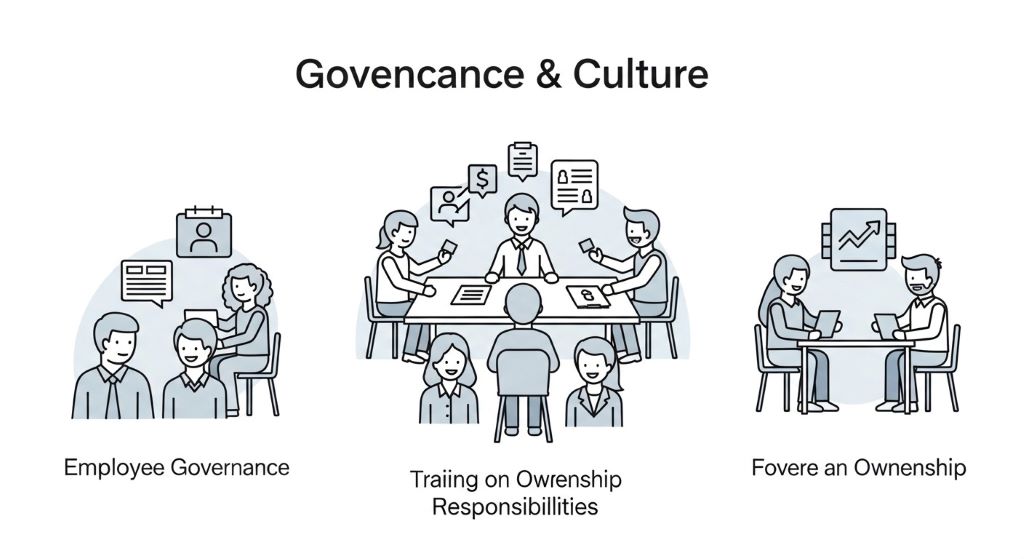
Buying a business is a major commitment. Not every employee is ready for it, even if they are excited about the idea. Therefore, preparation is just as important as the legal structure.
Start by identifying who has the leadership skills to manage the company. Then invest in training and development before the transition happens. This might include financial literacy courses, management coaching, or mentorship from the current owner.
Additionally, hold regular meetings to discuss business performance. When employees understand revenue, costs, and profitability, they make better decisions as future owners. This approach is sometimes called open-book management.
The goal is to make the transition as smooth as possible. A well-prepared team is far more likely to keep the business thriving after the owner exits.
Common Challenges and How to Overcome Them
Selling to employees is not without its challenges. Being aware of them in advance helps you plan better.
One common issue is financing. Employees may not have the personal savings to buy the business. However, options like seller financing, SBA loans, or ESOP structures can bridge the gap.
Another challenge is emotional attachment. Business owners often find it hard to let go. It can be difficult to hand over decision-making to people who were previously your employees. Therefore, setting clear boundaries early in the process is essential.
There may also be disagreements among employees about how the business should be run after the sale. A well-written governance agreement can address this. It defines voting rights, profit distribution, and how major decisions are made.
Finally, the transition takes time. Most employee ownership plans take one to three years to complete. Patience and clear communication are key to making it work.
Legal and Tax Considerations
Every ownership transition has legal and tax implications. These vary depending on how the business is structured and which state or country it operates in.
For sellers, the biggest tax concern is usually capital gains. Depending on how the deal is structured, you may owe taxes on the profit you make from the sale. However, selling to an ESOP in a C-corporation can allow you to defer or eliminate capital gains taxes under Section 1042 of the tax code.
For the buyers, interest paid on loans used to finance the purchase may be tax-deductible. Additionally, an S-corporation owned entirely by an ESOP pays no federal income tax. Therefore, more money stays in the business to fund growth and repay debt.
Always work with a qualified attorney and a tax advisor who specialize in business transitions. The rules are complex, and a mistake can be costly.
Conclusion
Selling a business to employees through an ownership transition plan is a powerful and rewarding option. It rewards the people who helped build the company. It preserves the culture and values you worked hard to create. Additionally, it can offer significant financial and tax benefits for the seller.
The process requires careful planning, the right legal structure, and strong communication. Whether you choose an ESOP, a management buyout, or seller financing, the key is to start early and get the right advisors on your side.
Therefore, if you are thinking about exiting your business in the next few years, an employee ownership transition plan is well worth exploring. It may be the most meaningful exit you can make.
Frequently Asked Questions
1. How long does an ownership transition plan take?
Most ownership transitions take between one and three years to complete. The timeline depends on the structure you choose, the size of the business, and how quickly financing can be arranged. ESOPs tend to take longer to set up than management buyouts.
2. Do employees need to pay for the business out of their own pocket?
Not necessarily. In many structures, the business itself helps fund the purchase. With an ESOP, a trust borrows money on behalf of employees and repays it using company profits. With seller financing, the owner is paid back in installments from future business revenue.
3. Can I sell only part of my business to employees?
Yes. Many owners choose a partial transition first. This means selling a portion of the business to employees while retaining some ownership themselves. This can be a good way to test the arrangement before committing to a full exit.
4. What happens if the business struggles after the sale?
This depends on how the deal is structured. With seller financing, if the business cannot make payments, you may need to renegotiate the terms. With an ESOP, the employees bear the risk as the value of their shares can fall. Therefore, it is important to build strong governance and financial oversight into the plan from the start.
5. Is an ESOP right for every business?
No. ESOPs work best for businesses with at least 20 employees, stable cash flow, and a value of at least $1 million. They are also expensive to set up. However, for the right business, they offer exceptional tax advantages and can create lasting employee wealth.
Related Topics:
Behind the Barrier: How You Educate Your Team on Safety Protocols
What Can You Do with Your Pension Pot in Retirement?