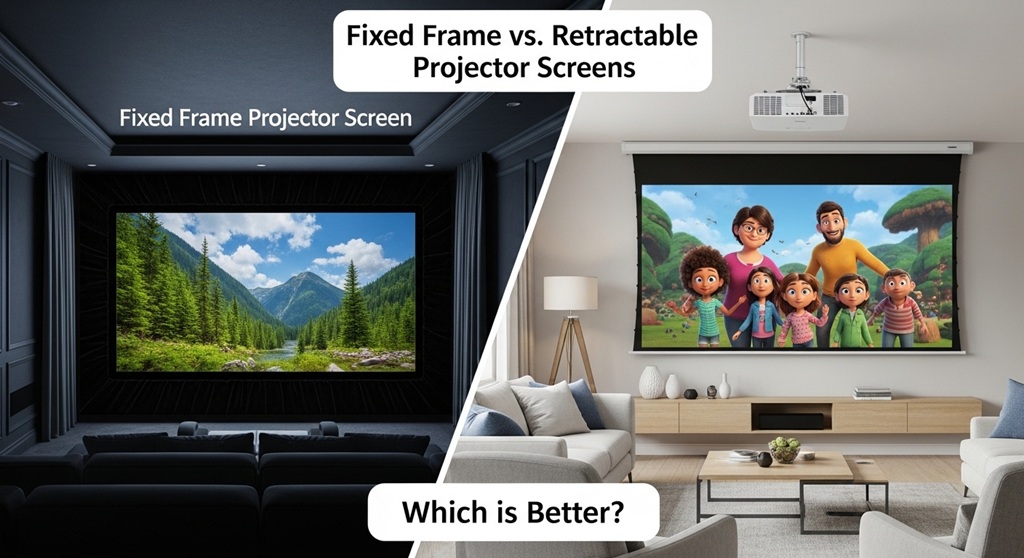
When setting up a home theater or presentation space, one of the first decisions you’ll face is choosing between fixed frame and retractable projector screens. These two types of screens are the most popular options, each offering unique benefits. Whether you’re installing a home theater or creating a professional presentation space, choosing the right projector screen is crucial to achieving the best viewing experience. But how do you decide between the fixed frame and retractable projector screens?
In this guide, we’ll break down the differences between these two screen types to help you make an informed decision. By the end, you’ll know which screen type fits your space, budget, and specific needs. So, let’s dive in and explore these two options in detail!
Fixed Frame vs Retractable Projector Screens: What’s the Difference?
What is a Fixed Frame Projector Screen?
A fixed frame projector screen is a screen that is mounted permanently to the wall, creating a dedicated viewing area. These screens are ideal for home theaters, dedicated spaces, or rooms that can afford a permanent setup. Fixed frame screens provide a smooth, wrinkle-free surface, and they are often made of tensioned materials that keep the surface perfectly flat.
Key Benefits of Fixed Frame Screens:
- Consistent Image Quality: The surface stays taut, eliminating any wrinkles or distortions.
- Aesthetic Appeal: These screens provide a clean, modern look and are designed to blend seamlessly into home theaters or presentation spaces.
- No Maintenance: Once installed, you don’t have to worry about any operational issues.
Ideal For:
- Home theaters with dedicated spaces.
- Spaces where a projector screen is a permanent feature.
What is a Retractable Projector Screen?
On the other hand, a retractable projector screen is designed to be pulled down when in use and retracted back into a casing when not in use. This type is perfect for multi-purpose rooms, businesses, or any area where you may need to hide the screen when it’s not being used. Retractable screens come in two forms: manual and electric. Both options allow for easy setup and storage, making them a versatile choice.
Key Benefits of Retractable Screens:
- Space-Saving: Ideal for rooms where the screen needs to be hidden when not in use.
- Convenience: With an electric retractable screen, you can control it with a remote for ease of use.
- Portable: Some retractable screens are portable, so you can move them around for different setups.
Ideal For:
- Multi-purpose rooms where the screen needs to be hidden away.
- Offices, classrooms, or other spaces that require occasional projector use.
Fixed Frame Screens: Pros and Cons
Pros of Fixed Frame Screens
- Image Quality: Since the screen is always taut, the image quality is crisp and clear without any distortions or wrinkles. This is particularly important for those who value the highest quality image for movies or presentations.
- Aesthetic Appeal: Fixed frame screens provide a sleek, professional look. They can be designed to blend seamlessly into your space, giving your home theater or office an upscale feel.
- Durability: With no moving parts, fixed frame screens are built to last. You don’t have to worry about the mechanisms wearing out or malfunctioning over time.
Cons of Fixed Frame Screens
- Permanence: Once installed, fixed frame screens are a permanent addition to your room. This makes them less ideal for spaces that need to be flexible or multi-purpose.
- Space Consumption: Fixed frame screens need to be mounted to the wall or ceiling, which can take up space in smaller rooms.
- No Hiding Option: If you don’t want the screen visible when it’s not in use, a fixed frame screen isn’t the right choice. It will remain in place, taking up part of the room’s visual space.
Retractable Screens: Pros and Cons
Pros of Retractable Screens
- Space-Saving: The major benefit of retractable screens is their ability to be hidden when not in use. This makes them a great option for smaller spaces or multi-functional rooms where you need flexibility.
- Flexibility: Retractable screens can be rolled down only when needed, allowing for easy storage. This means you won’t have to commit to a permanent setup, and you can use your space for other activities.
- Convenience: If you opt for an electric retractable screen, you can control it with a remote or even through a smart home system. This makes it simple to use, especially in a business or classroom setting.
Cons of Retractable Screens
- Maintenance: Retractable screens have moving parts that can wear out over time. While these parts are generally durable, there’s always a risk of malfunctions.
- Image Distortion: In some cases, retractable screens may not be as smooth as fixed frame screens. This can lead to some distortion, especially if the screen is not pulled down tightly.
- Cost: Retractable screens, especially electric ones, tend to be more expensive than fixed frame options. If you are on a budget, a fixed frame might be the better choice.
Which One Is Right for You? Key Considerations
1. Space Considerations
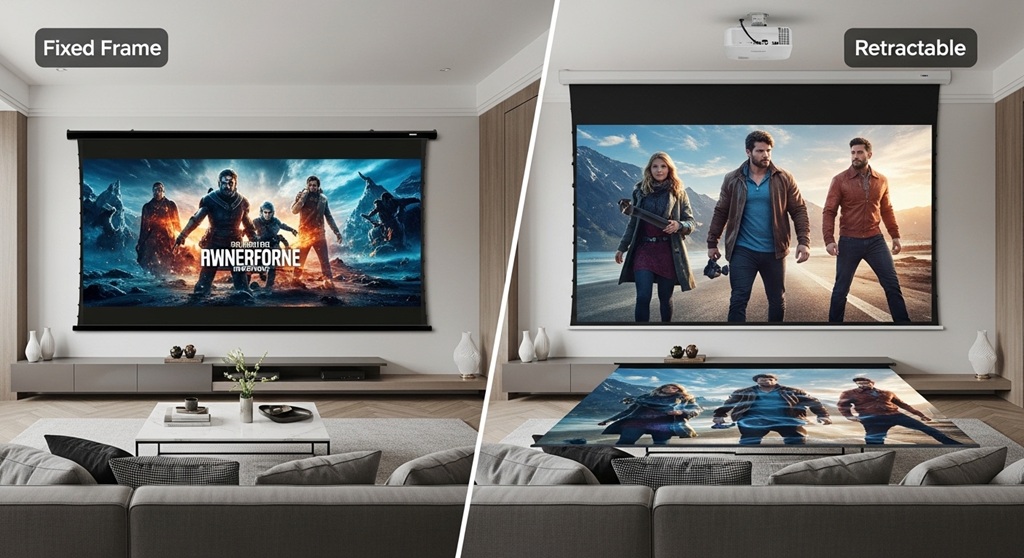
If you have a dedicated space for your projector and want a permanent setup, a fixed frame screen is likely the best choice. It provides a professional, high-quality viewing experience and blends seamlessly into your home theater or office setup.
However, if your space is multi-functional or you need to hide the screen when it’s not in use, a retractable screen is the way to go. It offers flexibility and the convenience of storage, making it perfect for spaces where the screen isn’t in constant use.
2. Image Quality
Fixed frame screens tend to provide better image quality due to their consistently taut surface. If you’re a cinephile or need the highest quality image for professional presentations, a fixed frame screen is the optimal choice.
Retractable screens, while still providing decent image quality, may not be as crisp as fixed frame options. If the utmost image quality is crucial, opt for a fixed frame.
3. Budget and Installation
While retractable screens tend to be more expensive, they offer the benefit of space-saving. If you’re on a tight budget but still want a quality projector screen, a fixed frame might be the better option for you. However, if convenience and flexibility are worth the extra cost, then investing in a retractable screen can be worthwhile.
Conclusion
Choosing between fixed frame and retractable projector screens ultimately depends on your specific needs and preferences. If you’re looking for a permanent, high-quality solution and have a dedicated space for your projector, a fixed frame screen is an excellent option. On the other hand, if you need flexibility, space-saving, and the ability to hide the screen when it’s not in use, a retractable screen is the better choice.
No matter which screen type you choose, make sure to consider factors like installation, image quality, and budget. Your decision will impact your overall viewing experience, so take your time and select the option that best meets your needs.
Ready to upgrade your projector setup? Whether you choose a fixed frame or retractable screen, you’re one step closer to a perfect viewing experience. Click here to explore our wide range of projector screens and find the perfect match for your space today!
FAQ Section
1. What’s the difference between fixed frame and retractable projector screens?
Fixed frame screens are mounted permanently to the wall and provide a smooth, taut surface for consistent image quality. Retractable screens can be rolled up and hidden when not in use, offering more flexibility but sometimes sacrificing image quality.
2. Which type of projector screen is better for home theaters?
For dedicated home theaters, a fixed frame screen is typically the best choice due to its consistent image quality and sleek, permanent setup.
3. Are retractable screens good for presentations?
Yes, retractable screens can be very useful for presentations in spaces where the screen needs to be hidden when not in use. Electric retractable screens can also be controlled remotely for convenience.
4. How do I install a fixed frame projector screen?
Fixed frame screens are usually mounted on the wall using screws or brackets. Some models may require ceiling mounting, depending on the layout of your room.
5. Do retractable projector screens wear out over time?
Yes, retractable projector screens have moving parts that can wear out over time, especially if they are used frequently. Regular maintenance can help extend their lifespan.
6. Can I use a fixed frame screen in a multi-purpose room?
While a fixed frame screen is best suited for dedicated spaces, it can be used in multi-purpose rooms if you’re okay with the screen being permanently visible. For flexibility, consider a retractable screen.
7. Which projector screen offers better image quality?
Fixed frame screens usually provide superior image quality due to their consistently flat surface. Retractable screens can have slight distortions, especially if the surface isn’t pulled down taut.