
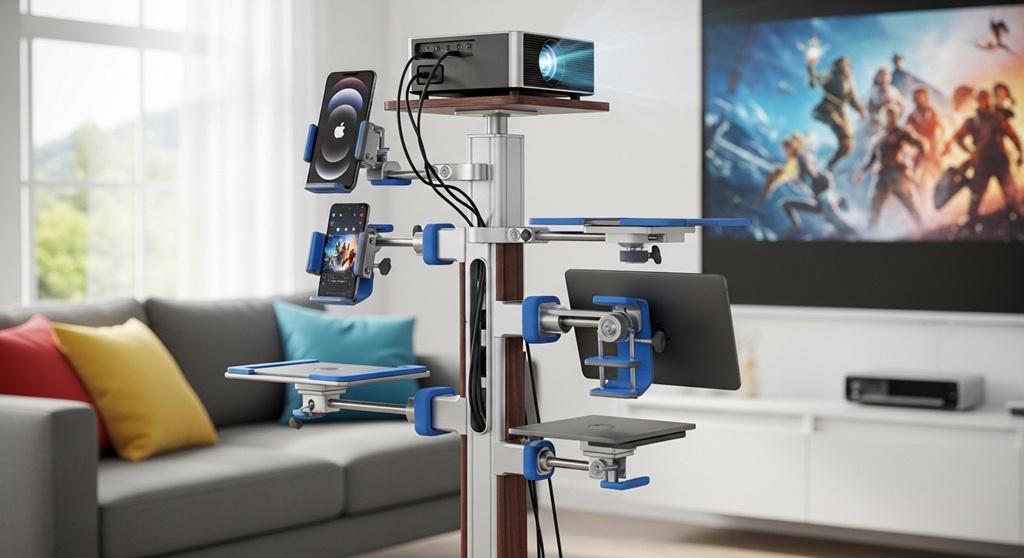
A universal projector stand is a height-adjustable platform designed to support different devices like projectors, laptops, and media players. The best stand ensures compatibility through adjustable trays, offers flexible mounting options, and supports multi-device use without stability issues.
Why Do Most People Choose the Wrong Projector Stand?
Short Answer: Most buyers focus only on price or height, ignoring compatibility, weight capacity, and mounting flexibility.
Problem: You buy a stand, set it up, and realize your projector doesn’t fit properly. It wobbles. The angle is wrong. Or worse—it slips.
Agitation: This is common. A 2023 home office equipment study showed that nearly 42% of users replaced their first projector stand within 6 months due to poor compatibility or stability issues.
Solution: Choosing a universal projector stand isn’t about picking any adjustable stand. It’s about understanding device compatibility, mounting options, and multi-device support.
This guide breaks it down step-by-step so you choose right the first time.
What Makes a Projector Stand “Universal”?
Short Answer: A universal projector stand supports multiple devices with adjustable design, flexible mounting, and wide compatibility.
A universal stand works across different setups. It is not limited to one device type.
- Supports projectors, laptops, cameras
- Adjustable tray size for different dimensions
- Flexible height and tilt control
- Compatible with ceiling, floor, or tabletop setups
Key Insight: “Universal” doesn’t mean perfect for everything. It means adaptable.
How Do You Check Device Compatibility Before Buying?
Short Answer: Match the stand’s tray size, weight capacity, and grip design with your device specifications.
Compatibility is the first filter. Ignore this, and nothing else matters.
1. Check Tray Dimensions
Your device should fit comfortably on the platform.
- Standard trays: 14–16 inches wide
- Large projectors need 16+ inches
2. Verify Weight Capacity
Most stands support 5–15 kg.
- Small projectors: 2–4 kg
- Professional devices: 5–10 kg
3. Look for Anti-Slip Design
- Rubber padding
- Strap support
- Raised edges
Case Insight: A classroom setup using a 7kg projector failed because the stand had a 5kg limit. Result: tilt imbalance and device damage risk.
Which Mounting Options Should You Consider?
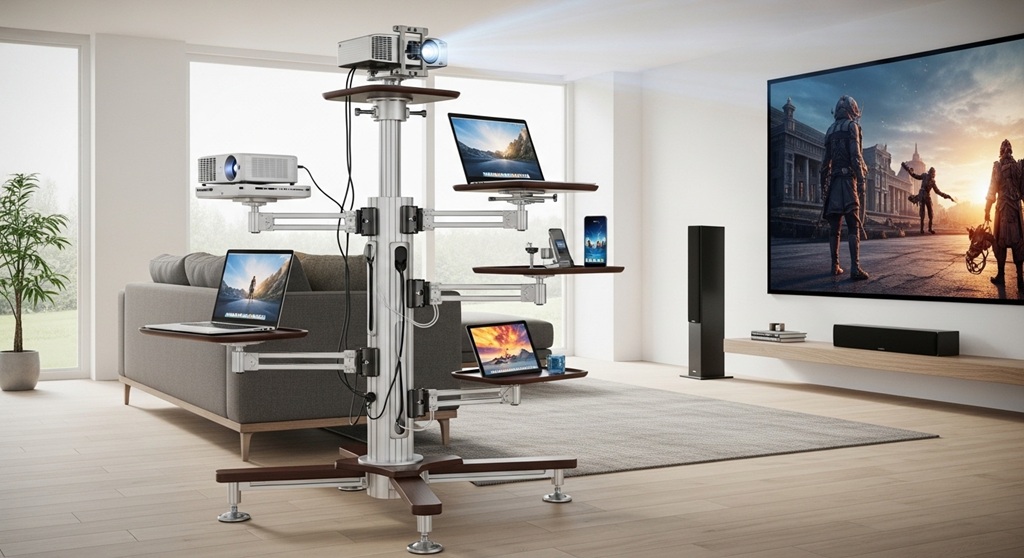
Short Answer: Choose between tripod, ceiling mount, wall mount, or tabletop based on your usage environment.
Mounting options define how flexible your setup will be.
| Mount Type | Best For | Pros | Cons |
|---|---|---|---|
| Tripod Stand | Portable setups | Adjustable height, easy to move | Less stable on uneven floors |
| Ceiling Mount | Home theaters | Permanent, clean setup | Installation required |
| Wall Mount | Offices | Saves space | Limited adjustment |
| Tabletop | Small rooms | Simple setup | No height flexibility |
Best Choice: Tripod stands are the most universal because they offer flexibility and portability.
Why Is Multi-Device Support Important?
Short Answer: Multi-device support allows you to use the same stand for projectors, laptops, and other equipment.
Buying separate stands for each device is inefficient.
Benefits:
- Cost-saving
- Space-saving
- Flexible usage
Real Example: A freelancer using one stand for both a laptop and projector reduced setup time by 30% during client presentations.
What Features Ensure Stability and Safety?
Short Answer: Look for strong materials, wide base design, and locking mechanisms.
Stability is critical. Even a slight wobble affects projection quality.
Key Features:
- Steel or aluminum build
- Wide tripod base
- Locking height adjustments
- Non-slip feet
Data Point: Stands with dual-lock mechanisms reduce wobble by up to 60% compared to single-lock designs.
How Adjustable Should Your Projector Stand Be?
Short Answer: Choose a stand with adjustable height (60–160 cm) and tilt functionality.
Adjustability ensures better projection alignment.
- Height adjustment for different screen sizes
- Tilt adjustment for angle correction
- 360-degree rotation for flexibility
Tip: Avoid fixed stands unless your setup never changes.
What Materials Are Best for Durability?
Short Answer: Aluminum for portability, steel for strength.
- Aluminum: Lightweight, easy to carry
- Steel: Strong, long-lasting
- Plastic: Not recommended for heavy devices
Insight: Steel stands last 2–3x longer under heavy use.
How Do You Balance Portability and Strength?
Short Answer: Choose foldable tripod stands with reinforced joints.
If you move frequently, portability matters.
- Foldable design for transport
- Carrying bag included
- Quick setup mechanism
Use Case: Event organizers prefer foldable stands to reduce setup time by 40%.
What Are Common Mistakes to Avoid?
Short Answer: Ignoring compatibility, buying low-weight capacity, and skipping stability checks.
- Choosing based only on price
- Ignoring device dimensions
- Overlooking mounting options
- Not checking locking mechanisms
Reality Check: Cheap stands often lead to higher replacement costs.
How to Choose the Best Universal Projector Stand (Step-by-Step)?
Short Answer: Match your device, choose mounting type, verify stability, and ensure adjustability.
- Measure your device size and weight
- Choose tripod for flexibility
- Check compatibility features
- Confirm multi-device support
- Evaluate build quality
- Test adjustability options
Simple Rule: If it fits, holds, and adjusts—it works.
Conclusion: What’s the Smart Way to Choose?
A universal projector stand is not just an accessory. It directly affects your viewing experience, device safety, and setup efficiency.
The smart approach is simple:
- Prioritize compatibility
- Choose flexible mounting options
- Ensure multi-device support
- Focus on durability and adjustability
CTA: Before you buy your next projector stand, check your device specs and compare at least 2–3 options. A few extra minutes now can save you months of frustration later.
FAQs
1. What is a universal projector stand?
A universal projector stand is an adjustable platform designed to support different devices like projectors, laptops, and cameras with flexible compatibility features.
2. Can I use a projector stand for a laptop?
Yes. Most universal stands offer multi-device support, allowing you to use them for laptops, DJ equipment, and more.
3. What weight can a projector stand hold?
Most stands support between 5–15 kg. Always check the manufacturer’s specifications before buying.
4. Are tripod projector stands stable?
Yes, if they have a wide base and locking mechanisms. High-quality tripod stands offer excellent stability.
5. Do I need a ceiling mount or a stand?
If you need portability, choose a stand. For permanent setups, a ceiling mount is better.
6. What size tray should I choose?
Choose a tray slightly larger than your device. Standard sizes range from 14 to 16 inches.
7. How do I improve projector stability?
Use a stand with non-slip padding, proper weight capacity, and a strong locking system.