
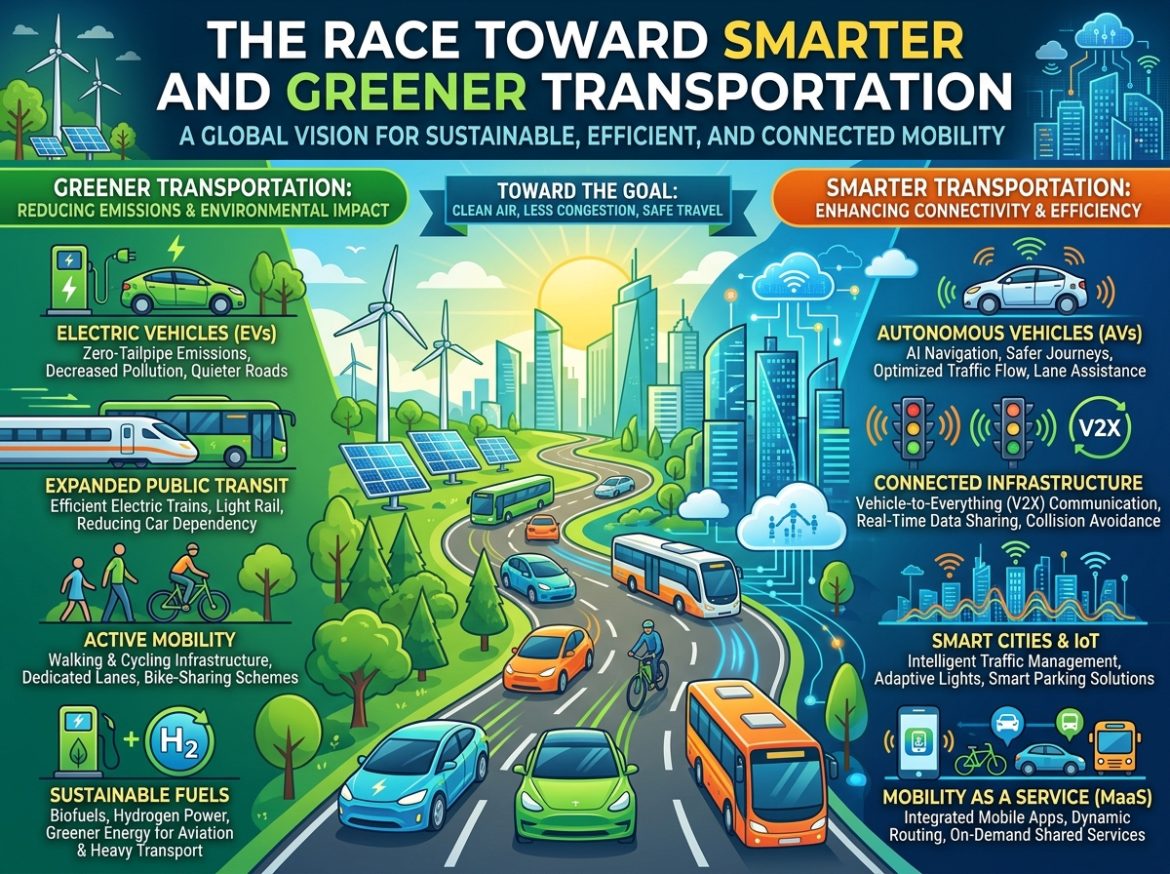
Transportation is undergoing one of the biggest transformations in modern history. Rising environmental awareness, rapid technological progress, and changing consumer expectations are reshaping how people and goods move across cities and countries. Electric vehicles, intelligent traffic systems, connected infrastructure, and sustainable mobility solutions are no longer future concepts. They are becoming an everyday reality that influences businesses, governments, and households alike.
As industries embrace innovation, transportation is evolving into a smarter, cleaner, and more efficient ecosystem. Automakers, technology companies, policymakers, and investors all play important roles in this transition. While challenges remain, the momentum toward sustainable transportation continues to grow, creating opportunities that extend far beyond the automotive sector.
The Shift Toward Sustainable Mobility
The transportation industry has long been one of the largest contributors to greenhouse gas emissions, making sustainability a central priority for governments and businesses worldwide. Environmental agencies, international organisations, and industry experts broadly agree that reducing transportation emissions will be essential for meeting long-term climate goals. This shared commitment has accelerated investment in cleaner technologies and modern infrastructure.
Electric vehicles have become one of the most visible symbols of this transformation. Improvements in battery efficiency, charging networks, and manufacturing processes have made electric mobility increasingly practical for everyday drivers. As production scales and technology advances, many consumers are finding that electric vehicles offer both environmental benefits and competitive long-term operating costs.
The growing interest in electric vehicle manufacturers has also attracted investors seeking to understand the industry’s future direction. Market participants frequently monitor indicators such as the NIO Singapore share price to better understand how companies within the global electric vehicle sector are responding to innovation, competition, and changing consumer demand. These observations often provide valuable insight into broader market sentiment rather than focusing solely on individual businesses.
Smart Technology Is Redefining Transportation
Modern transportation is becoming significantly more intelligent through the integration of digital technologies. Artificial intelligence, machine learning, advanced sensors, and real-time data analysis are improving how vehicles operate while helping transportation networks become more responsive and efficient. These innovations support safer driving experiences while reducing unnecessary delays and fuel consumption.
Connected vehicles are another important development. Cars can increasingly communicate with navigation systems, infrastructure, and even nearby vehicles to provide real-time information about road conditions, traffic congestion, and potential hazards. This constant exchange of information allows drivers to make better decisions while helping cities manage transportation more effectively.
Autonomous driving technology continues to receive substantial attention as research progresses. Although fully self-driving vehicles are still developing, many advanced driver assistance features are already improving road safety today. Automatic emergency braking, adaptive cruise control, lane-keeping assistance, and intelligent parking systems demonstrate how automation can enhance the driving experience while supporting safer transportation.
Cities Are Building the Infrastructure for the Future
Technology alone cannot transform transportation without modern infrastructure. Governments around the world are investing in charging stations, renewable energy integration, smart highways, and digital traffic management systems that support sustainable mobility. Urban planners increasingly recognise that transportation infrastructure must evolve alongside new vehicle technologies.
Charging accessibility has become a key focus as electric vehicle adoption expands. Public charging stations, workplace charging options, and residential charging solutions continue to grow, making electric vehicle ownership more practical for a wider range of drivers. Continued investment in charging infrastructure helps reduce range anxiety while encouraging broader adoption.
Smart cities are also embracing integrated transportation systems that connect buses, trains, bicycles, ride-sharing services, and pedestrian pathways. Digital platforms allow commuters to plan efficient journeys using multiple transportation options while reducing congestion and improving overall mobility. These integrated systems support environmental objectives while making daily travel more convenient for residents.
Innovation Is Expanding Beyond Passenger Vehicles
The shift toward smarter transportation extends well beyond personal vehicles. Commercial fleets, logistics providers, shipping companies, and public transportation systems are also embracing cleaner technologies and digital innovation. Businesses recognise that improving transportation efficiency can reduce operational costs while supporting sustainability commitments.
Electric delivery vehicles, intelligent fleet management software, and predictive maintenance technologies are helping logistics companies optimise operations. Real-time route planning reduces unnecessary mileage, while data-driven maintenance minimises downtime and improves vehicle reliability. These improvements create measurable benefits for both businesses and customers.
Public transportation is evolving as well. Electric buses, smart ticketing systems, and real-time passenger information help create more reliable and environmentally friendly transit networks. As cities continue expanding public transportation investments, commuters benefit from cleaner, more efficient travel options that reduce dependence on private vehicles and ease urban congestion.
Conclusion
The race toward smarter and greener transportation is about far more than replacing gasoline-powered vehicles. It represents a comprehensive transformation driven by technological innovation, environmental responsibility, and evolving consumer expectations. Every improvement in infrastructure, connectivity, automation, and clean energy brings the transportation sector closer to a more sustainable future.
While the journey is still unfolding, the direction is becoming increasingly clear. Organisations that embrace innovation and individuals who stay informed about emerging trends will be better positioned to understand the opportunities created by this evolving landscape. Smarter transportation is no longer a distant vision but an ongoing reality that continues to reshape how the world moves forward.