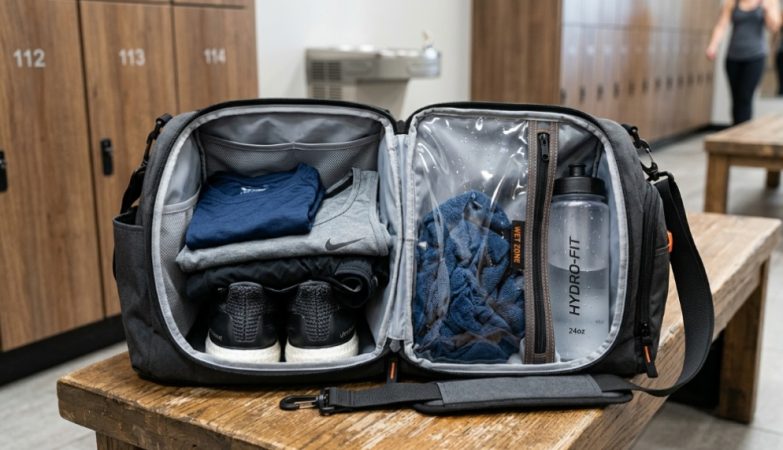
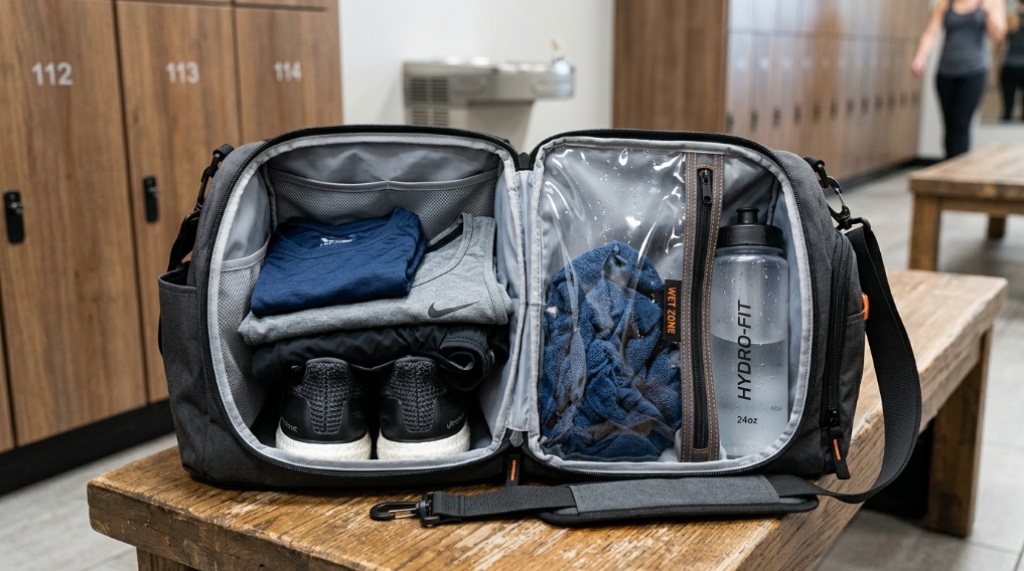
You finish a hard workout, and the first thing you want to do is toss your damp towel and sweaty shirt into your bag and leave. But do you put them in the main compartment with your clean clothes and phone, or is there a dedicated spot for them? That decision is exactly why wet and dry gym bag compartments exist, and understanding the distinction keeps your gear, electronics, and nose happy. When you examine the Adidas Power workout bag features and durability, you will notice how compartmentalization is often the difference between a bag that lasts a season and one that lasts years.
Quick Answer
Wet compartments are water-resistant, separate sections designed to isolate damp or soiled gear so moisture, odor, and bacteria do not spread. Dry compartments are the standard storage areas for clean clothes, shoes, electronics, and valuables. The key difference is the barrier between them: a wet compartment uses sealed or coated materials and often a zipper closure, while a dry compartment prioritizes ventilation, accessibility, and organization.
Key Takeaways
- A wet compartment is defined by its moisture barrier, not by its size. Even a small lined pocket qualifies if it prevents liquid transfer.
- Dry compartments are not automatically waterproof. Many are simply separate zones within the same bag, so rain and sweat can still migrate between them.
- The material matters as much as the design. Coated nylon or polyester linings resist moisture; untreated cotton or mesh will not.
- A wet compartment only works if you seal it properly and dry it out after each use, otherwise it becomes a mold breeding ground.
- For most gym-goers, one wet compartment plus a ventilated shoe zone covers the majority of daily needs.
What Is a Wet Compartment, Exactly?
A wet compartment is a dedicated section of a gym bag lined with a moisture-resistant material, usually a coated polyester, nylon, or PVC-free waterproof film. Its purpose is to create a physical and material barrier between damp items and the rest of your gear.
The defining feature is not the label on the tag; it is the construction. A true wet compartment typically has:
- A sealed or coated internal lining that does not absorb water
- Water-resistant zippers or a fold-over closure
- Welded or taped seams in higher-end designs
- A separate opening so you do not have to expose clean contents to reach it
A common mistake is assuming any dark, plastic-looking pocket is a wet compartment. Some bags use a shiny lining purely for stain resistance, not water containment. If the seams are stitched rather than sealed, water will eventually wick through. If the zipper is a standard coil zipper without a water-resistant coating, it will leak under pressure.
Another overlooked point: a wet compartment does not dry itself. Unless it has a drain grommet or breathable outer panel, moisture stays trapped inside. That is why some bags include a small ventilation eyelet in the wet pocket, but even that is not a substitute for emptying and air-drying the bag after use.
What Makes a Dry Compartment Different?
A dry compartment is the opposite philosophy. It is designed to keep clean items organized, accessible, and protected from physical damage, not from water. Most gym bags have one main dry compartment and several smaller dry pockets.
Dry compartments typically prioritize:
- Breathability, so damp air from your body or clothes does not get trapped
- Quick access, often with top-loading or wide-mouth openings
- Padding for laptops, tablets, or phones
- Dividers or mesh pockets for small items like keys, wallets, and headphones
Here is the trade-off: making a dry compartment extremely water-resistant usually makes it less breathable. A fully waterproof main compartment can trap humidity, which is why many hybrid bags use a waterproof wet zone and a breathable dry zone rather than making the entire bag impermeable.
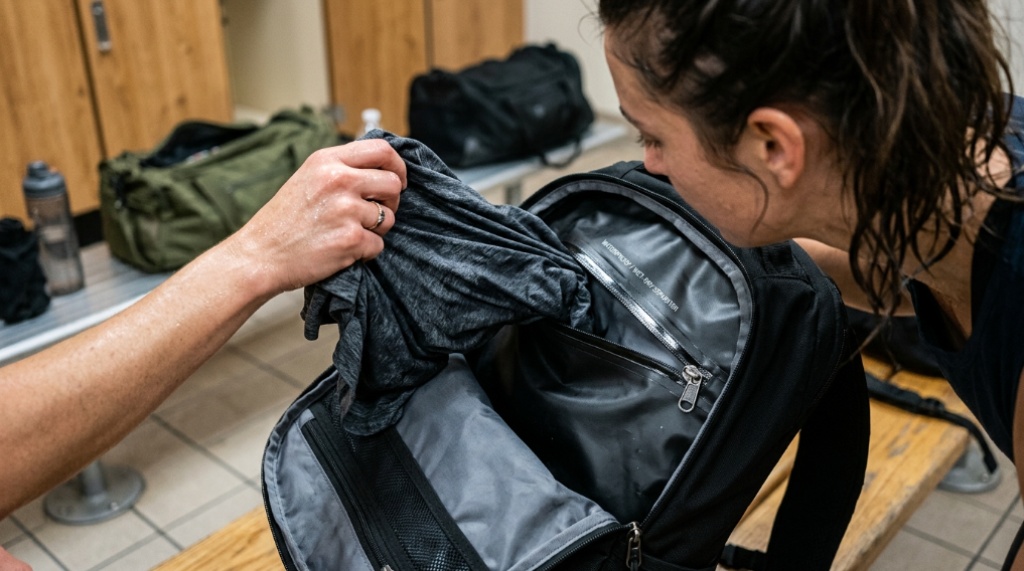
It is also worth noting that “dry compartment” does not mean “waterproof compartment.” If you put a wet towel in the main dry section, the moisture will spread to everything it touches. The dry label describes intended use, not a guarantee.
Wet vs. Dry Compartments: A Direct Comparison
| Feature | Wet Compartment | Dry Compartment |
|---|---|---|
| Primary purpose | Isolate moisture, sweat, and odor | Store clean, dry, or valuable items |
| Lining material | Coated nylon, waterproof film, or PVC-free liner | Standard polyester, nylon, or mesh |
| Seams | Often sealed, welded, or taped | Standard stitched seams |
| Zipper type | Water-resistant or covered zipper | Standard zipper or open top |
| Ventilation | Limited or grommet-based | Often breathable mesh or open design |
| Best for | Wet towels, swimsuits, dirty laundry, shoes | Clothes, electronics, toiletries, food |
| Main risk | Mold and odor if not dried properly | Moisture transfer from adjacent wet items |
The table makes one thing clear: these are not better or worse compartments, they are complementary. A bag with only dry compartments forces you to choose between carrying wet gear or keeping your clean items dry. A bag with only wet compartments gives you nowhere safe to put a phone or a fresh shirt.
Why the Separation Matters More Than You Think
The practical consequences of mixing wet and dry gear go beyond a damp shirt.
Odor and bacteria. A damp towel left in a sealed bag for a few hours is an ideal environment for mildew and bacteria. Once that smell settles into the lining, it is difficult to remove with simple wiping. Isolating wet items limits the contamination to one zone that is easier to clean.
Electronics and valuables. Moisture damage to a phone, earbuds, or a laptop is often irreversible. A wet compartment is not just about convenience; it is a protective boundary.
Fabric damage. Repeated exposure to moisture can weaken seams, cause zipper corrosion, and break down internal coatings. Keeping the dry zones actually dry extends the life of the entire bag.
Social and practical embarrassment. Opening a bag in a locker room or a car and releasing a wave of stale sweat smell is a real problem. Separation is a small design choice with a large quality-of-life impact, Looking to organize your gear for a different sport next? Check out this guide on How to Choose Golf Bags to find the right storage solutions for the course.
How to Choose Based on Your Routine
Not everyone needs the same compartment setup. Use your actual habits as the deciding factor.
- If you swim or do water sports: A dedicated wet compartment is non-negotiable. Look for sealed seams and a drain grommet.
- If you commute by bike or on foot: You need a wet zone for rain-exposed items and a padded dry zone for electronics.
- If you go straight to work after the gym: Prioritize a large dry compartment for work clothes and a separate wet zone for gym clothes.
- If you mostly do short indoor sessions: A single wet pocket for a towel and a ventilated shoe compartment may be enough.
- If you travel with gym gear: Look for multiple compartments, including a wet zone, a shoe zone, and a dry laptop sleeve.
A common error is buying a bag with many compartments but no true moisture barrier. Count the seals, not the pockets.
Common Mistakes That Undermine Compartment Design
Even a well-designed bag can fail if used incorrectly.
- Putting wet items in the dry section “just this once.” One wet towel can transfer moisture to everything nearby, and the lining may hold residual dampness.
- Zipping a wet compartment closed while the bag is stored. This traps humidity and encourages mold. Leave it open or empty it when you get home.
- Assuming a wet compartment is airtight. Most are water-resistant, not waterproof. Do not submerge the bag or leave it in standing water.
- Never cleaning the wet zone. Sweat and pool water leave residue. Wipe the lining with a damp cloth and mild soap periodically, then air-dry fully.
- Overloading the wet compartment. If the zipper strains, the seal distorts. Keep the load within the intended capacity.
Do You Actually Need Both?
For most people who exercise regularly, yes. The wet and dry distinction solves a real daily problem: how to carry clean and dirty items together without compromising either. A bag with only dry compartments forces compromises. A bag with only wet compartments is impractical for electronics and clean clothes.
That said, if your routine is simple, such as a quick gym session followed by a shower at home, a single well-ventilated main compartment plus a small wet pocket may be sufficient. The goal is not to have the most compartments; it is to have the right separation for what you actually carry.
When evaluating any bag, including the Adidas Power line, check whether the wet compartment has a genuine moisture barrier and whether the dry compartments offer enough organization for your specific items. Durability in this context is not just about fabric thickness; it is about whether the compartment design still functions after months of real use,
Frequently Asked Questions
Can I use a wet compartment for dry items?
Yes, but it offers no advantage and may expose those items to residual moisture or odor from previous use. Use dry compartments for clean gear whenever possible.
Is a ventilated shoe compartment the same as a wet compartment?
No. A shoe compartment is designed for airflow and odor control, but it usually lacks a sealed moisture barrier. It can hold damp shoes, but it will not contain water the way a lined wet compartment does.
How do I clean a wet compartment without damaging the lining?
Wipe it with a damp cloth and mild soap, then let it air-dry completely with the compartment open. Avoid harsh solvents, machine washing, and direct heat, which can break down waterproof coatings.
Why does my gym bag still smell even with a wet compartment?
The most common cause is storing the bag closed while damp. Even a sealed wet zone traps humidity. Empty the bag, open all compartments, and let it dry after every use.
Are wet compartments waterproof or just water-resistant?
Most are water-resistant, meaning they handle splashes and damp items but not submersion. Check the product details for sealed seams and water-resistant zippers if you need stronger protection.
Does a wet compartment add much weight to a gym bag?
Usually not significantly. The lining and seals add some material, but the difference is minor compared to the bag’s overall fabric and hardware. The moisture protection is generally worth the small weight trade-off.
Conclusion
The difference between wet and dry gym bag compartments comes down to one thing: whether the section is built to block moisture or to organize clean gear. A wet compartment uses sealed or coated materials to isolate damp items, while a dry compartment prioritizes breathability and access for everything else. For most active people, the ideal bag has both, plus a ventilated shoe zone. Check the construction, not just the labels, and dry the bag out after every use. That habit, more than any feature, determines how long your bag stays fresh and functional.