
Key Takeaways
- Inclusive growth means economic progress reaches every community, not just a lucky few.
- Technology has cut the cost of starting a business to almost nothing.
- Young firms create most net new jobs, according to the Kauffman Foundation.
- Diverse companies are more likely to outperform their peers, per McKinsey research.
- Digital training, fair lending, and mentorship open real doors for diverse founders.
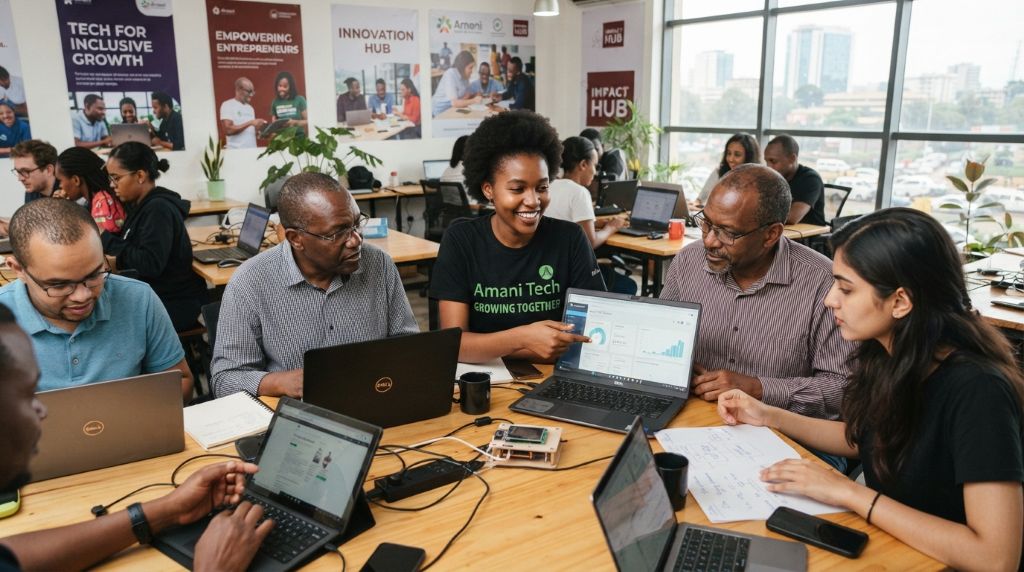
Last spring, I volunteered at a free digital skills workshop at my neighborhood community center. One attendee stood out. Rosa had run a small cleaning business for years. She managed everything through word of mouth and a paper notebook. By the end of that session, she had built her first booking website. Within three months, her client list had doubled.
That afternoon changed how I see economic progress. Growth does not spread on its own. It spreads when people get tools, training, and a fair chance. Therefore, the meeting of technology, entrepreneurship, and inclusive growth is more than a trend. It is a working plan for stronger communities. This article explains how these three forces connect and what you can do to help.
What Is Inclusive Growth and Why Does It Matter?
Inclusive growth means economic progress that reaches everyone. Jobs, income, and opportunity do not cluster in a few big cities. Instead, they spread across suburbs, small towns, and rural areas alike.
Traditional growth often leaves people behind. Wages climb in tech hubs while nearby towns lose factories. Inclusive growth works differently. It asks a simple question: who actually benefits from this progress? If the answer is “only a few,” the plan needs work.
Fairness aside, inclusion is smart economics. According to McKinsey research, companies with the most diverse leadership teams are 39 percent more likely to outperform their peers financially. Diverse teams spot more risks and find more ideas. Therefore, communities that include everyone simply make better decisions.
In practice, inclusive growth looks like this:
- More local residents owning businesses and property.
- Wider access to fast internet and digital tools.
- Fair access to loans, credit, and investment.
- Job training that matches real local employers.
Each item builds on the others. A trained worker with fair credit and good internet can become an owner. As a result, wealth stays local and multiplies across generations.

How Technology Creates New Paths to Business Ownership
Not long ago, starting a business demanded savings, inventory, and an office lease. Technology has removed most of those costs. Today, a phone and a cheap data plan can run a company.
The numbers back this up. The U.S. Census Bureau counted a record 5.5 million new business applications in 2023. Many of those founders started with little more than a laptop. Meanwhile, the tools themselves keep improving. Here are the game changers:
- Website builders that cost nothing to start.
- Digital wallets and mobile payments for quick sales.
- Social media for free marketing and customer contact.
- Free online courses teaching marketing, accounting, and design.
- Cloud software that replaces expensive office programs.
These tools reward effort instead of connections. A grandmother can sell her recipes online. A veteran can offer freelance bookkeeping from home. Additionally, technology lets founders serve customers far beyond their ZIP code. My community workshop proved this to me. Most attendees needed only two hours of guidance to get online. The barrier was never talent. It was access, and access can be fixed.
Why Entrepreneurship Uplifts Diverse Communities
New businesses are job machines. Research from the Kauffman Foundation shows young firms create most net new jobs in the United States. When diverse communities launch businesses, they create local jobs that outside companies never fill.
Local ownership also keeps money nearby. Local economics research shows independent businesses keep more money circulating in their communities than chains do. That money supports schools, repairs, and other small shops.
Entrepreneurship also builds role models. When a young person sees a founder who looks like them, ownership starts to feel possible. The Stanford Latino Entrepreneurship Initiative reports that Latino-owned businesses have grown far faster than the national average. That momentum inspires the next wave of founders.
Finally, business ownership builds assets. A business can grow, hire, and be passed down. Therefore, entrepreneurship is one of the fastest paths to family wealth in communities that history has often shut out.
The Barriers That Still Hold Communities Back
Progress is real, but so are the obstacles. The first is the digital divide. Pew Research Center finds that rural Americans are less likely to have home broadband than suburban residents. Without reliable internet, online sales, digital banking, and free training stay out of reach.
The second barrier is credit. The Federal Reserve’s Small Business Credit Survey shows Black-owned firms are denied funding at higher rates than white-owned firms. Many are rejected for thin credit files, not weak ideas.
Third, networks matter. Many founders find their first customer or investor through someone they know. People in under-resourced communities often lack those connections. Additionally, a quiet skills gap persists. Tools are simple, yet pricing, marketing, and taxes still require training.
Rosa almost quit at this stage. Her first website got traffic, but she struggled with payments and pricing. A mentor from our workshop stepped in. Within weeks, her systems worked. Her story proves that barriers fall fastest when someone helps.
How We Can Build More Opportunities Together
Solving these gaps does not require a massive budget. It requires steady, local action from many hands. Here are five steps that work:
- Fund digital skills training. Libraries, churches, and nonprofits can host free workshops like the one I joined.
- Expand fair lending. Community lenders already serve founders that big banks overlook. Supporting them grows their reach.
- Become a mentor. One hour a month can save a new founder from a costly mistake.
- Buy local and diverse. Every purchase at a community business keeps money circulating where you live.
- Push for broadband. Attend a local meeting and ask about internet expansion plans.
Additionally, employers can hire from overlooked talent pools. Investors can back funds focused on underrepresented founders. Meanwhile, schools can teach entrepreneurship early, so ownership feels normal rather than distant. Therefore, everyone holds a piece of this puzzle. Governments move slowly. Neighbors can move now.
Conclusion: Growth That Includes Everyone
Rosa’s cleaning business now has a website, a schedule, and a waitlist. Nothing about her talent changed last spring. Only her access did. That is the whole lesson of inclusive growth in the digital age.
Technology has made ownership affordable. Entrepreneurship turns that access into jobs and community wealth. However, the circle only grows when we include people who have been left out. The tools are ready. The research is clear. What remains is the human part: training, lending, mentoring, and buying local. For entrepreneurs who need guidance along the way, understanding what is a small business consultant and why do businesses hire one? can help them identify practical strategies for building and growing a sustainable business.
Now I want to hear from you. Have you seen technology change a small business in your community? What worked, and what did not? Leave your story in the comments below. Also, if this article gave you an idea, share it with someone who is ready to start. One share could be someone’s first step.
Frequently Asked Questions
What does inclusive growth mean?
It means economic progress that lifts every community, not just wealthy areas or large companies. Everyone gets fair access to jobs, tools, and ownership.
How does technology help small business owners?
It lowers startup costs, reaches global customers, and offers free training. A founder can now run a full business from a phone.
Why is entrepreneurship important for diverse communities?
New businesses create local jobs, keep money in the neighborhood, and build family wealth. They also create role models for young people.
What barriers do diverse founders face today?
The main barriers are weak broadband, biased lending, and limited business networks. Skill gaps also slow many new owners down.
How can I support inclusive growth locally?
Teach a digital skill, mentor a founder, or shop at community businesses. You can also support local lenders and broadband projects.